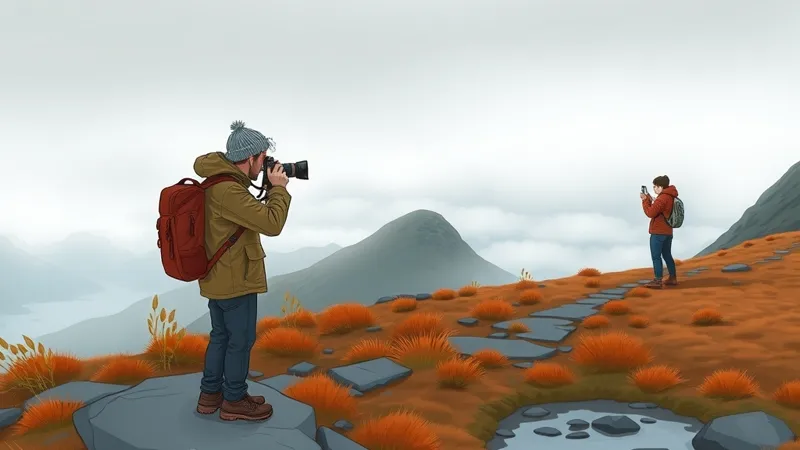
How can you photograph Skye when the sky is overcast?
Work with diffuse light, prioritise textures and smaller landscapes, reduce featureless sky, and adapt locations to wind, rain and visibility rather than waiting for sunshine. Rock, water, vegetation and village details can all make worthwhile subjects without a mountain backdrop.
For Isle of Skye photography in overcast weather, the useful distinction is between soft light and unsafe conditions. Cloud can soften shadows; wind-driven rain and poor visibility can make an outing unsuitable. Neither mountain views nor particular stops should underpin the day's success.
What do climate averages tell you about light on Skye?
Climate averages support planning for wet, changeable conditions, but they cannot establish how often the sky is completely overcast.
The Met Office UK climate averages for Prabost, near Portree, use the 1991–2020 baseline. Selected monthly comparisons are:
- May: 195.83 sunshine hours; 90.10 mm rainfall.
- December: 30.72 sunshine hours; 202.66 mm rainfall.
- Annual context: 1,200.34 sunshine hours; 1,769.05 mm rainfall.
May has the highest sunshine total and December the lowest in this baseline. These are station averages, not an island-wide forecast. Sunshine totals and rainfall do not measure the percentage of completely overcast skies. Treat overcast as a practical planning baseline, not a verified cloud-cover statistic or a prediction for your visit.
Which camera settings help in flat light, mist and rain?
Choose settings around subject movement, available light and camera stability, rather than applying a universal overcast preset.
- Handheld landscapes: choose an aperture for the required depth of field, then keep the shutter fast enough for your focal length and handling. Raise ISO when necessary rather than accepting accidental blur.
- Moving water: use a faster shutter for droplets or a slower one for flowing texture. Slow exposures need stable support; moving vegetation may still blur.
- Mist: prioritise the remaining visible shapes. Check exposure carefully because automatic metering can render pale scenes too dark; avoid brightening until cloud detail clips.
Capture RAW where available for greater editing latitude. Check the histogram and highlight warnings, protecting bright cloud detail when it matters. Choose white balance deliberately: neutral colour suits some scenes, while a cooler rendering may suit others.
On a phone, tap the subject and adjust exposure before shooting. A polariser may reduce reflections on wet rock or water, but its effect varies with angle and subject, and it costs light.
Which compositions work when mountain views disappear?
Build compositions from what remains visible: foreground texture, restrained colour, negative space and nearby layers.
- Soft cloud with good visibility: photograph wet rock, vegetation and harbour details from established paths; minimise blank sky.
- Patchy mist: separate visible ridges, trees or buildings into layers, leaving deliberate negative space.
- Rain with safe shelter: isolate reflections or details without blocking entrances or paths.
- Visibility too poor for safe navigation: abandon the viewpoint plan; choose a genuinely sheltered alternative or postpone.
A small patch of vegetation against dark stone can provide enough colour contrast. Editing can refine that relationship, but cannot recover a mountain view hidden by cloud.
Which Skye photography locations suit different conditions and abilities?
Choose the specific route, not the destination's reputation: walking commitment and exposure vary within each location.
Use Walkhighlands Skye routes to check the named walk, length and published difficulty before committing.
- Portree harbour: boats, buildings and reflections; walking depends on the chosen streets and waterfront section. Exposed edges and slippery surfaces are reasons to move elsewhere. Do not assume step-free access throughout.
- Roadside viewpoints: nearby landforms with potentially limited walking. Kilt Rock's viewpoint platform beside the car park is wheelchair accessible, but that does not establish accessibility at other roadside stops. Wind or unsafe stopping conditions justify changing plans.
- Old Man of Storr: rock formations on a 3.8 km outing. The ascent is steep and exposed, with uneven steps; this is not an easy roadside photo stop. Low visibility, wind or unsuitable footing favour a lower-level alternative.
- Quiraing: layered landforms; the full 6.8 km circuit is Hard, with mud, scree and cliff-edge exposure. A nearby viewpoint is not the full circuit. Poor conditions warrant abandoning the walk, and Highland Council road notices may identify snow or ice closures.
- Dunvegan: garden textures and architectural details, with walking dependent on the chosen route. Check Dunvegan Castle's opening and access information; the estate may close in high winds.
Cuillin mountain outings considered in this guide require a qualified mountain guide; they are not substitutes for a cancelled roadside stop.
How should you adapt a photography day to wind and low cloud?
Start with conditions and access, then choose the subject—not the reverse.
- Check the forecast and Met Office weather warnings, alongside Mountain Weather Information Service mountain forecasts.
- Check Highland Council road updates and the destination's own access information.
- Choose a route within the whole group's ability, including the return journey.
- Switch to genuinely sheltered ground or postpone if conditions deteriorate.
No forecast guarantees local conditions. A harbour, garden or roadside platform is not automatically sheltered, and a tripod is never a reason to remain in unsafe wind.
What should you carry and how can you photograph responsibly?
Carry waterproof clothing, suitable footwear, camera rain protection, dry storage and several lens cloths. Secure equipment before opening a bag, avoid changing lenses in wind-driven rain, and check your footing before stepping backwards.
Use the Scottish Mountain Rescue safety advice for outdoor preparation and the Scottish Outdoor Access Code for responsible access. Protect eroding ground by staying on established paths, leave gates as found, give livestock space and avoid disturbing wildlife. Keep tripods clear of paths and roads. These are practical responsibilities, not reasons to pursue a photograph after conditions become unsuitable.
Can you plan a Skye photography visit without a car?
Yes: staying in Portree can support local photography and onward excursions, but remote viewpoints need more planning.
Rural service frequency, return departures and walking connections constrain early and late outings. Trains do not run onto Skye. Check dated ScotRail, Scottish Citylink and Stagecoach timetables together, including their validity periods; consult CalMac when considering a ferry connection.
A stop name alone does not establish a safe walking route to a viewpoint. Avoid building a day around an unconfirmed connection or the last possible return. No steam-train seat is implied by reaching Skye. Our getting-there guide explains the transport choices.
How do day trips and multi-day tours affect photography opportunities?
Tours simplify transport but usually offer less photographic flexibility than a self-directed stay.
An Inverness day trip concentrates the visit into scheduled stops. Edinburgh departures involve a longer mainland approach; three-to-five-day itineraries can spread opportunities across more days, without guaranteeing better light. Check walking expectations, time at stops and accommodation location: an overnight stay on Skye does not necessarily mean Portree.
Standard sightseeing tours may not accommodate prolonged photography or sunrise and sunset sessions. Weather can remove advertised stops. Confirm that the itinerary actually reaches Skye rather than touring only the mainland Highlands.
Compare day trips with multi-day tours, then consider Edinburgh multi-day options.
Isle of Skye Guide is an independent editorial and affiliate comparison site, not a tour operator. We may earn commission from qualifying bookings. Current tour prices and ratings belong in the GetYourGuide widgets on the linked tour pages.
What should visitors know about photographing Skye in overcast weather?
Overcast light can be useful; safe access and realistic expectations matter more than sunshine.
Is overcast light useful for landscape photography?
Yes. Diffuse light suits textures and restrained colour, but soft light does not make hazardous weather safe.
Can I photograph Skye with a phone?
Yes. Adjust exposure for bright cloud, clean the lens and compose around visible subjects. Avoid exposing the phone to unnecessary rain.
Is sunrise worth planning around?
Yes, as an optional opportunity—not the foundation of the trip. Cloud, access and transport may make a later outing more productive.
Can I reach photography locations without a car?
Yes, particularly around Portree. Remote viewpoints depend on workable transport and safe walking connections; advertised tour stops are not guaranteed access.
Are the Storr and Quiraing easy walks?
No. The Storr ascent is steep and exposed, and the full Quiraing circuit is Hard. Optional nearby viewpoints are different outings, not evidence that the full routes are easy.
Sources
Use the relevant authority for the detail being planned:
- Met Office: Prabost climate averages, baseline 1991–2020; its forecasts and warnings support daily planning.
- Mountain Weather Information Service: mountain weather and visibility forecasts.
- Walkhighlands: named-route descriptions, lengths and difficulty.
- Highland Council: road notices and winter access updates.
- Dunvegan Castle: its own opening, access and closure information.
- ScotRail, Scottish Citylink, Stagecoach and CalMac: official timetables; check validity periods and connecting services together.
- Scottish Outdoor Access Code: responsible access; Scottish Mountain Rescue: outdoor preparation and safety advice.