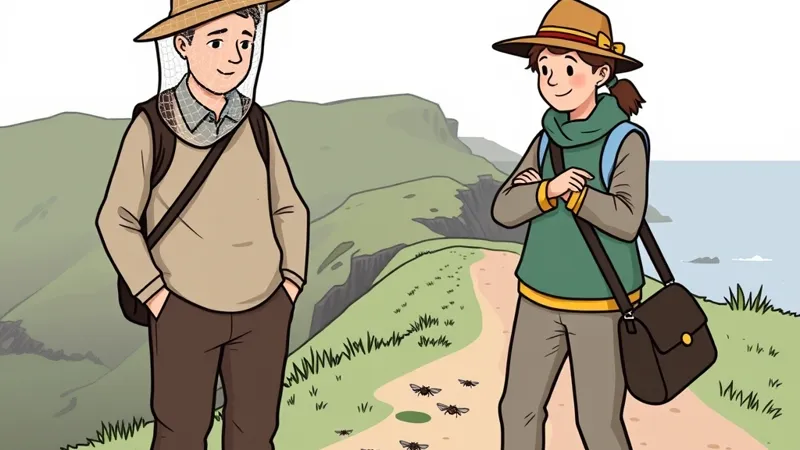
When do midges bite on Skye, and what helps prevent bites?
Biting midges on Skye are generally a late-spring-to-early-autumn nuisance. Calm, damp conditions around dawn and dusk favour biting, but overcast daylight hours can also bring persistent activity. Combine a labelled insect repellent, covered skin and a fine-mesh midge head net: no season, location or product guarantees freedom from bites.
Quick answer: Pack repellent labelled for biting midges, long sleeves and trousers, and a midge-specific head net. Keep them accessible before leaving your accommodation or tour vehicle. A breeze may help; neither rain nor a coastal setting is an all-clear.
“Crepuscular” means most active around dawn and dusk—not active only then. Highland biting midges are tiny flying insects, distinct from mosquitoes and ticks. NatureScot provides the ecological context for Scotland’s midges; seasonal patterns are planning guidance, not a prediction for your visit.
Which months are usually worse for midges on Skye?
July and August are usually the main concern, with activity building earlier and declining into autumn. Use this compact seasonal planner rather than treating any month as guaranteed protection:
- Winter and early spring: generally lower concern, but a calendar cannot guarantee no bites.
- Late spring and May: activity can begin building; pack protection even if conditions feel cool.
- June: prepare for biting, particularly during calm outdoor breaks.
- July and August: the broad peak period for mass attacks.
- September: numbers usually fall, but midges on Skye in September can still affect a visit.
- Later autumn: frost and changing conditions reduce activity; timing varies.
The Scottish Midge Forecast can supplement planning nearer departure. It is a commercial forecast, not independent evidence that its associated repellent outperforms alternatives.
How do wind, cloud and time of day affect midge activity?
Calm, sheltered places and low light favour biting; a breeze may reduce activity without reliably preventing it. Overcast weather can extend biting through daylight hours, while full sunshine generally brings less activity.
A sheltered garden or vegetation-lined stopping place can feel very different from a nearby open path. Rain alone is not a reliable all-clear: damp conditions and subsequent calm can still be troublesome.
Check the Met Office for local weather forecasts. Wind, rain and cloud forecasts describe weather—not how many midges will bite you. Seeking exposed ridges, cliff edges or unsafe ground simply to find stronger wind is not a sensible avoidance strategy.
Which insect repellents are suitable for biting midges?
Choose by the authorised product label, not by a universal “best repellent for midges on Skye” claim. An active ingredient’s reputation does not establish every formulation’s suitability.
- DEET: consider a formulation only where its label supports biting-midge use.
- Icaridin, also called picaridin: another option where the specific label includes biting midges.
- PMD or oil of lemon eucalyptus formulations: consider only appropriately labelled products. Formulated repellents are not interchangeable with unformulated essential oils.
Following the framework explained in HSE biocides guidance, use the product according to its label, including application, reapplication and any restrictions concerning eyes, damaged skin and clothing. Mosquito evidence does not establish effectiveness against Scottish biting midges.
For children or during pregnancy, check the exact label and ask a pharmacist if uncertain. NHS bite-prevention advice supports combining repellent with suitable clothing rather than relying on either alone.
Do head nets, clothing and home remedies stop midge bites?
Proper barriers help protect covered areas, while home-remedy popularity is not proof of reliable protection.
- Fine-mesh midge nets — physical barrier: choose a net specifically intended for midges. A mosquito net is not necessarily fine enough. Check the fit around the neck and maintain clear vision.
- Long sleeves and trousers — coverage: reduce exposed skin, but leave hands, faces and gaps vulnerable. Loose covering layers are practical for stops.
- Labelled repellents — formulation-specific protection: use on permitted areas as directed; products sharing an ingredient do not necessarily perform identically.
- Scented bath oils, citronella and dietary supplements — unreliable substitutes: anecdotes do not establish dependable protection. A cosmetic bath oil is not automatically a repellent; a citronella product still needs an appropriate label.
Species-specific research matters when comparing effectiveness. Mosquito studies and testimonials cannot establish a winner against Highland biting midges. Smoke and fires are not a sensible workaround.
How can you plan Skye walks and sightseeing around midges?
Keep protection within reach and adjust breaks when safe, rather than choosing harder routes to escape insects. If biting becomes distracting, consider an indoor café, museum or visitor centre, subject to opening and access.
Safety takes priority: the Storr is steep and exposed, and the Quiraing is graded Hard. This guide recommends a qualified guide for technical Cuillin outings. Neither higher ground nor a longer walk is a sensible midge-avoidance strategy.
Use Walkhighlands for route descriptions and Mountaineering Scotland for mountain-safety advice. Weather, closures, ability and equipment come before insect avoidance. On tours, stops may change with conditions; no itinerary promises midge-free breaks.
What should you pack for a Skye tour or a stay in Portree?
Carry protection in your day bag, not in luggage you cannot reach during a stop.
- Repellent labelled for biting midges and suitable for everyone using it.
- A fine-mesh midge head net.
- Long sleeves, trousers and covering layers appropriate to the weather.
- Supplies for cleaning skin and making a cold compress.
- Any bite-relief treatment recommended as suitable by a pharmacist.
Visitors travelling to Skye without a car can encounter midges at outdoor queues and connections. Tours from Inverness or Edinburgh also involve outdoor breaks, and long journeys can make luggage inconvenient to access.
For Portree accommodation, consider how you will use gardens, terraces and entrances: an urban base does not guarantee protection. Ask about window screens if ventilation matters to you; they are not necessarily provided.
If deciding how to travel, compare a Skye day trip with a multi-day tour. Isle of Skye Guide is an independent editorial and affiliate guide, not a tour operator. Current tour prices and ratings belong in the linked pages’ GetYourGuide widgets.
What should you do if midge bites become itchy or swollen?
NHS Inform’s insect-bite guidance recommends washing the area, applying a cold compress and avoiding scratching. Ask a pharmacist about suitable symptom relief rather than choosing medication or doses from general travel advice.
According to NHS Inform, worsening redness, heat, pain, swelling, discharge or feeling unwell warrants medical advice.
Breathing difficulty or swelling of the mouth or throat calls for immediate emergency help, as explained in NHS Inform’s guidance. For urgent but non-emergency problems in Scotland, consult that guidance for accessing NHS urgent care.
What else should visitors know about midges on Skye?
These answers distinguish reduced likelihood from guaranteed protection.
Do midges bite all day on Skye?
Midges can bite throughout overcast daylight hours on Skye. Dawn and dusk are often worse, but midday is not automatically bite-free.
Is Portree or the coast midge-free?
Neither Portree nor the coast is guaranteed midge-free. A breeze can help, but sheltered streets, gardens and coastal stopping places may still have biting midges.
Does winter guarantee no bites?
Winter generally brings much less midge activity, but it does not guarantee freedom from insect bites. Season alone cannot identify what caused a bite.
Can children use the same repellent as adults?
Suitability depends on the specific product’s age restrictions and application instructions, rather than its suitability for adults; HSE biocides guidance explains the role of authorised product labels. Check the label and ask a pharmacist if suitability is unclear.
Are midges the same as ticks?
No. Midges are tiny flying insects; ticks are arachnids that attach to skin. Tick checks and safe removal require separate advice: consult NHS Inform’s tick-bite guidance rather than treating an attached tick like a midge bite.
Sources
These sources have different roles; general guidance and commercial forecasts do not establish comparative product efficacy.
- NatureScot: Scottish wildlife and ecological context.
- Met Office: local weather forecasts, not bite predictions.
- HSE: biocide authorisation guidance; individual product labels determine permitted uses.
- NHS: prevention and general bite care.
- NHS Inform: treatment and Scottish care pathways.
- Scottish Midge Forecast: commercial planning resource, not independent comparative product evidence.
- Walkhighlands and Mountaineering Scotland: route and mountain-safety context only.