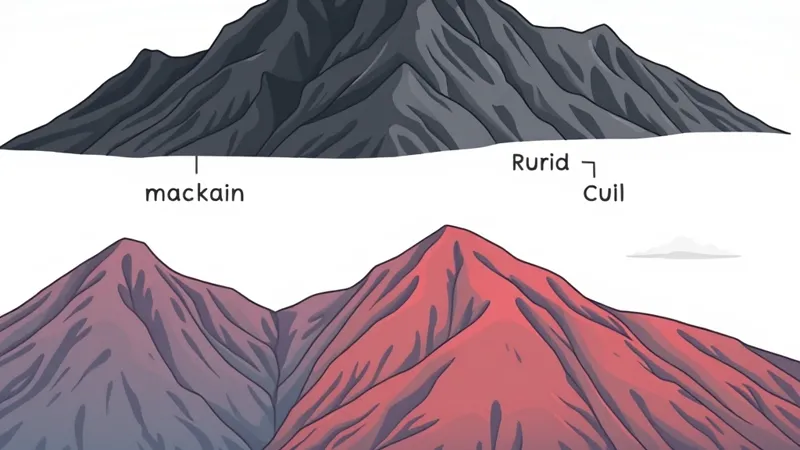
What is the difference between the Black Cuillin and the Red Cuillin?
The Black Cuillin are predominantly dark, jagged gabbro mountains; the Red Cuillin are predominantly granite hills with rounder profiles and reddish weathered slopes. Neither range should be treated as an easy casual walk simply because it looks approachable from the road.
Our editorial recommendation is to undertake Cuillin mountain routes only with a suitably qualified local guide. That is distinct from low-level sightseeing: looking towards the mountains does not require entering their scrambling, scree or ridge terrain.
This compact comparison summarises the broad geological distinction described by the British Geological Survey, not the composition of every individual hillside:
Feature     Black Cuillin        Red Cuillin
Rock        Mainly gabbro        Mainly granite
Appearance  Dark, jagged          Rounder, reddish slopes
Terrain     Ridges, scrambling   Steep slopes, scree
Options     Views or guided      Views or guided
            mountain outings     mountain outings
Why do the Black Cuillin and Red Cuillin look different?
Different igneous rocks, weathering and glacial erosion combine to produce their contrasting shapes. Gabbro and granite formed as molten rock cooled underground, but differ in mineral composition and how they break down when exposed.
Dark minerals contribute to the Black Cuillin's appearance. Granite commonly weathers into paler, reddish or rusty-looking surfaces in the Red Cuillin. Neither range consists entirely of its headline rock type.
Glaciers excavated corries and valleys and sharpened parts of the mountain landscape. Rock structure and subsequent weathering also matter: colour alone does not explain the difference between a broken ridge and a rounded slope. British Geological Survey and NatureScot geological resources provide the relevant regional context.
The names describe broad landscape characteristics, not colours guaranteed in every light. Rain, cloud, snow and the angle of the sun can change what visitors see.
Where are the two Cuillin ranges on Skye?
The Black Cuillin lie broadly west of Glen Sligachan, with the Red Cuillin to its east. Sligachan is a useful northern reference point; Glen Brittle gives context on the western side of the Black Cuillin, while Broadford lies towards the eastern approaches to the Red Cuillin.
This locator is schematic, not a walking map or driving circuit:
                         NORTH
                           ^
                       Sligachan
                           |
Glen Brittle — BLACK — Glen Sligachan — RED — Broadford
              CUILLIN                 CUILLIN
Use Ordnance Survey mapping for actual positions, paths and terrain. Place-name spellings can vary across maps and signs; the local names used here should remain consistent when comparing itineraries or translated guides.
Which Cuillin range suits sightseeing rather than mountain walking?
Either range can reward low-level sightseeing, provided weather and access allow views. Around Sligachan, visitors may see contrasting mountain profiles without committing to a mountain route. Cloud can hide the higher ground completely.
An outing towards Glen Brittle may offer a different perspective on the Black Cuillin; the Broadford side can provide context for the Red Cuillin. These are possible viewing areas, not a promised sequence of stops. A tour's actual itinerary determines whether it reaches them.
Rounded slopes are not evidence of easy walking. Even low-level paths can be rough, wet and unsuitable for some mobility needs. Ask about surfaces, gradients and the distance from the vehicle rather than relying on the description “short walk”. VisitScotland offers destination context, but tourism descriptions are not technical route assessments.
Do you need a guide to walk in the Cuillin?
For mountain routes, our editorial advice is to use a suitably qualified local guide; consult Mountaineering Scotland for mountain-safety guidance. This is our recommendation, not a claim that hiring a guide is universally required by law.
The Black Cuillin include exposed scrambling and climbing terrain where route choice and technical skills matter. The Red Cuillin present different challenges: steep slopes, loose scree and navigation demands, particularly when cloud removes landmarks.
Consult Mountaineering Scotland for mountain-safety guidance. Check a prospective guide's qualifications through the Association of Mountaineering Instructors or British Mountain Guides, and confirm that their qualifications and experience suit the intended activity.
Describe your experience honestly before booking. A guided booking does not guarantee a summit or ridge attempt; conditions and the group's abilities may require a different plan.
How does weather affect a visit to either Cuillin range?
Weather can change both the safety of a mountain outing and whether sightseeing produces any mountain views. Wind affects balance on exposed ground, rain makes footing more difficult, and cloud can obscure terrain as well as scenery. Snow and ice introduce additional hazards.
Use the Met Office mountain forecasts for trip-day planning. Guides may cancel mountain activities or replace them with lower-level alternatives, which still need their own assessment.
The Met Office climate averages describe long-term patterns, not conditions on your chosen day. Low-level station records cannot predict weather on a ridge, and no season guarantees clear views.
For winter mountain planning, note that the Scottish Avalanche Information Service does not cover Skye. The absence of a local bulletin is not evidence of safe snow conditions.
Can you visit the Cuillin without a car from Portree?
Portree can work as an accommodation base, but reaching a roadside stop is not the same as reaching a mountain route. Nor does an outward journey establish that a suitable return service exists.
Before choosing public transport, check official Scottish Citylink and Stagecoach timetables for exact stop names, operating days, seasonal changes and the final return service. No particular bus departure or connection is assumed here.
A guided pickup or sightseeing tour is an alternative only when its published pickup area and itinerary support your plan. Confirm the meeting point rather than assuming collection from your accommodation.
Use our Portree accommodation planning pages and car-free travel information alongside the wider Skye planning guides. Choose accommodation with the actual departure point in mind.
How can you include the Cuillin in a Skye tour from Edinburgh or Inverness?
Treat the Cuillin as a potential sightseeing element unless mountain activity is explicitly included. A Skye day trip from Inverness can offer landscape viewing within a broader itinerary. A three-to-five-day trip from Edinburgh or Inverness may allow more flexibility, but does not automatically include mountain walking.
Compare:
- Published pickup points and return arrangements.
- Overnight locations and whether accommodation is included.
- The guide's role: sightseeing commentary is not mountain instruction.
- Named stops and their weather-dependent alternatives.
Do not assume an overnight stay in Portree or a particular Cuillin viewpoint. Longer journeys, crowded stopping places and additional admission costs can also affect the experience.
Isle of Skye Guide is an independent editorial and affiliate comparison guide, not a tour operator. Use our day-trip versus multi-day comparison to choose a format, then consult the separate tour pages. Current prices and ratings belong in the GetYourGuide widgets on those pages, not in this evergreen comparison.
What else should visitors know about the Black and Red Cuillin?
Choose according to your interests and the conditions, not a universal ranking of the ranges.
Are the Red Cuillin easy to walk?
No. Rounded outlines can conceal steep ground, scree and demanding navigation. Our recommendation for mountain outings is a suitably qualified local guide.
Do the Black Cuillin require climbing?
Some routes involve climbing or exposed scrambling; low-level mountain viewing does not. The exact route, rather than the range's name alone, determines the skills required.
Can you see both ranges from Sligachan?
Sligachan can offer views towards both ranges, but cloud and visibility determine what is visible. Any walk beyond a viewing spot needs a separate access and terrain assessment.
Does a standard Skye tour include mountain walking?
Do not assume so. A viewpoint stop or a listed short walk is not a guided Cuillin mountain route. Check the published activity scope and weather-dependent arrangements.
Which range should you prioritise?
For sightseeing, choose a feasible viewing area with suitable access and the best available visibility. For mountain interests, discuss an appropriate route in either range with a qualified local guide.
Sources
Geology, mapping, safety and weather require different sources.
- British Geological Survey: regional rock types and geological context; NatureScot provides complementary landscape and glacial context.
- Ordnance Survey: place names, locations and terrain mapping.
- Mountaineering Scotland: mountain preparation and safety guidance.
- Met Office mountain forecasts: forecast conditions for mountain planning.
- Met Office climate averages: long-term climate context, distinct from daily forecasts.
Scottish Citylink and Stagecoach are the official sources for transport planning; no service-specific timetable claims are made in this article.