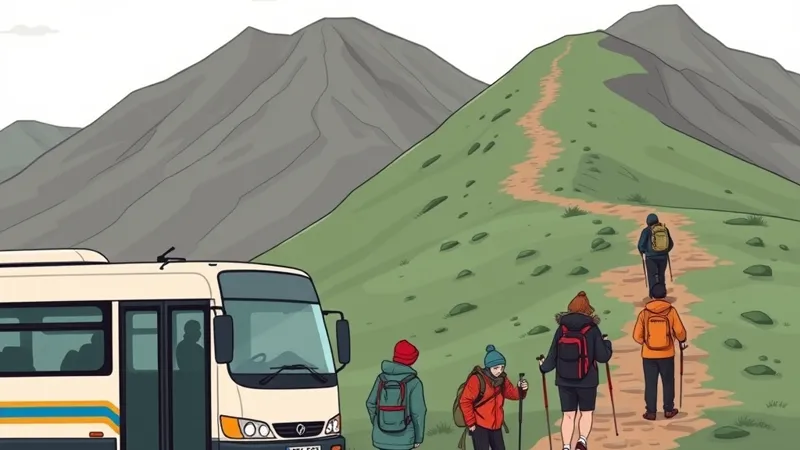
How much walking is there on a Skye tour?
Walking varies from short paths near sightseeing stops to substantial hikes; there is no reliable island-wide walking total. The advertised itinerary, terrain, weather and available alternatives determine the effort. A sightseeing tour listing the Storr or Quiraing does not automatically include the full walk.
Isle of Skye Guide is an independent comparison guide, not a tour operator. We help you distinguish scenic stops from walking commitments, without promising particular stops, views or conditions. Before booking, ask for the intended route—not simply the attraction’s name.
How does walking differ between day trips and multi-day tours?
More days do not necessarily mean harder walks. Distinguish coach or minibus sightseeing from explicitly advertised hiking tours; Edinburgh and Inverness departures are not interchangeable day-trip experiences.
- Inverness sightseeing day tour: walking may centre on short stops. Possible surfaces include gravel, steps and uneven ground. Ask which stops involve walking beyond the vehicle area.
- Longer Edinburgh tour: walking requirements depend on the programme and overnight arrangements. Ask about excursion paths, accommodation stairs and luggage handling.
- Multi-day sightseeing itinerary: additional days can spread out visits rather than add strenuous hikes. Ask which walks are planned on each day.
- Advertised hiking tour: expect a specific walking commitment, potentially involving steep, muddy or exposed terrain. Ask for route names, pace and fitness requirements.
Use our day-trip versus multi-day comparison to choose a format, then compare multi-day departures from Edinburgh. Current prices and ratings belong in the live GetYourGuide widgets, not fixed article claims.
How hard are the Storr, Quiraing and other common walks?
These routes are not uniformly easy, and a brief stop is not the full route. Use the named descriptions in Walkhighlands’ Skye route collection to identify the intended variant.
The following comparison separates terrain from grading. Numerical lengths are omitted because exact route variants have not been independently checked for this article; no full-route distance should be applied to an unspecified tour visit.
- Old Man of Storr ascent and return: the site manager describes the path as steep and exposed. Gravel gives way to steep, uneven rock steps, with rockfall danger higher up. This is a terrain description, not a verified Walkhighlands grade. A distant sightseeing stop is different from the ascent; check The Storr’s site-manager guidance alongside the route description.
- Quiraing circuit: the route information identifies Hard difficulty, distinct from its Medium length category. Expect steep grassy slopes, mud, scree and sections close to cliff edges. A roadside stop is not the circuit. Confirm the grading against the exact Walkhighlands variant before treating it as that publisher’s assessment.
- Fairy Pools return walk: the supplied route classification is Medium difficulty, despite its Short length category. Uneven ground and wet, slippery stones matter more than the label “short”. Confirm the intended turnaround and current crossing arrangements through route and destination guidance.
- Kilt Rock car-park-to-viewpoint platform: this is a defined short sightseeing visit, not a graded hill walk. The platform is described as wheelchair-accessible, but that does not establish step-free access from every vehicle position. Check the approach, boarding arrangements and current access separately.
For this audience, treat Cuillin mountain routes as guided-only choices, separate from ordinary sightseeing—not as casual extensions to a stop. This is a safety recommendation, not a legal guide requirement.
Can you skip a walk or choose a shorter option?
Opting out depends on the operator, stopping place and agreed arrangements. Do not assume you can remain aboard, find shelter or follow a shorter path independently.
Ask where you can turn around, where the group regathers, whether the vehicle remains accessible and what happens if you walk more slowly than others. A shorter route is not necessarily easier, and it is not a guaranteed accessible alternative. No sheltered waiting facility should be assumed.
Are Skye tours suitable for limited mobility or low fitness?
Walking stamina and step-free access are different requirements. Uneven surfaces, gradients, steps, vehicle boarding and standing at stops can matter even when walking is brief. Age or disability alone does not establish suitability.
Request these details in writing:
- Exact path surfaces, slopes, steps and available rest opportunities.
- Vehicle entrance steps and any boarding assistance or equipment.
- Mobility-aid dimensions accepted and storage arrangements.
- Accessible toilet locations and whether they are part of planned stops.
- A specific explanation of promotional descriptions such as “easy”.
Use VisitScotland’s accessibility guidance to structure your questions. A short stop is not automatically wheelchair-accessible.
How can weather change walking difficulty and stops?
Wind, wet rock, mud, snow and poor visibility can increase effort or remove a stop from the programme. Plan for overcast conditions without expecting clear views.
Consult the Met Office mountain forecasts for mountain conditions, alongside local forecasts. In winter, note that the Scottish Avalanche Information Service does not provide a Skye forecast; absence of a forecast does not establish safety.
Highland Council is the authority to consult for snow- and ice-related Quiraing road restrictions. Dunvegan Castle warns that high winds may cause short-notice castle and garden closures. These are access risks to check, not statements about current conditions.
What should you wear and carry?
Match your equipment to the advertised walk, not just the tour’s sightseeing label. Bring footwear with reliable grip, waterproof outer layers, warm layers, water, snacks and waterproof protection for essential belongings.
Walking trainers adequate for a paved stop may be unsuitable on muddy or rocky paths. Poles may help some walkers but do not make exposed or steep terrain easy. Consult Mountaineering Scotland’s safety-and-skills guidance for preparation and the Scottish Outdoor Access Code for responsible access.
Does Portree or car-free travel add extra walking?
Yes: accommodation, pickup points, bus stops and meals can add effort beyond excursions. Slopes and luggage can make apparently modest transfers demanding.
Check the actual pickup address and accommodation entrance rather than assuming a Portree overnight stay is central or step-free. Our Portree accommodation guide and car-free travel guide help frame those choices. Use Traveline Scotland and Stagecoach’s official information to research stops and timetables; confirm vehicle accessibility separately.
What should you ask before booking?
Ask for route-specific answers rather than a single walking total. Copy this checklist into your enquiry:
- Which exact routes and turnaround points are intended?
- Is each attraction a brief stop or a full hike?
- What surfaces, gradients and exposed sections should I expect?
- What pace is expected, and what happens if I fall behind?
- Are walks optional, and what shorter-route or waiting arrangements are available?
- Can I access the vehicle during stops, and how does boarding work?
- How are weather changes and cancelled walks handled?
Consult the independent comparison pages linked above for product details and live GetYourGuide widgets. We may earn commission from affiliate bookings. An itinerary listing is not a guarantee that a stop will operate.
What else should you know about walking on a Skye tour?
Suitability depends on the route and arrangements, not simply the tour label.
Are hiking boots needed?
Not for every sightseeing stop. Steep, wet or uneven walks require suitable grippy footwear; ask what the operator recommends for the actual route.
Is the Storr compulsory?
Not universally. Whether you can skip a planned ascent depends on the operator’s regrouping and waiting arrangements. Vehicle access or shelter is not guaranteed.
Is the full Quiraing circuit usually included?
Do not assume so. “Quiraing” may mean a sightseeing stop rather than the Hard circuit. The product description or operator must clarify the route.
Can children or travellers with knee difficulties participate?
Possibly, depending on individual ability and the itinerary. Steep descents, uneven steps and prolonged standing deserve particular attention; shorter does not always mean easier.
What happens when weather cancels a walk?
The operator may shorten, replace or drop it under its own arrangements. No replacement stop, clear view or sheltered waiting option is guaranteed.
Sources
These are research and access-check targets, not live-verified evidence. Exact route variants and verification dates remain unconfirmed here.
- Walkhighlands: named route descriptions, lengths and publisher-specific grades; route-guide evidence, not an access authority.
- Mountaineering Scotland: mountain preparation and safety. Scottish Outdoor Access Code: responsible access guidance.
- Met Office: mountain forecasts; its UK climate averages support climate claims, not guaranteed conditions.
- Highland Council: road notices. Dunvegan Castle: site-owner closure information. The Storr site manager: path and access guidance.
- VisitScotland: accessibility planning. Traveline Scotland and Stagecoach: transport planning and official service information.