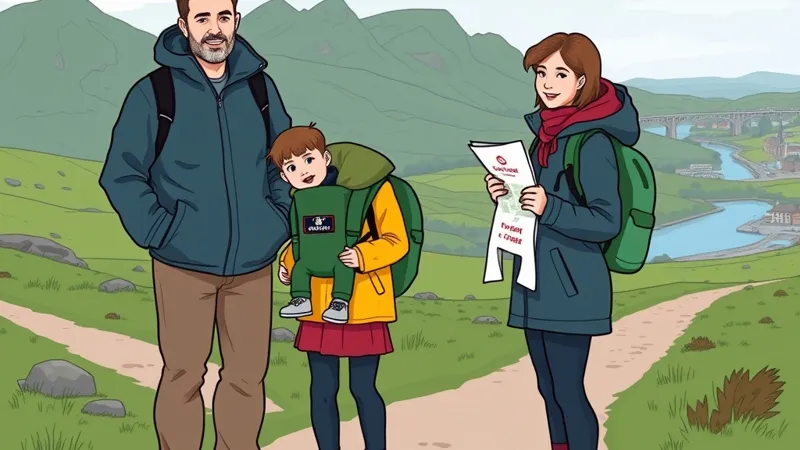
Is Skye practical with children?
Visiting the Isle of Skye with children works best with flexible plans, short outdoor sessions and a manageable base. Packed sightseeing schedules, long coach days and demanding walks can be poor fits. Neither views nor particular stops should be the measure of a successful visit.
- Toddlers: brief outings, snacks and familiar sleep routines work well; repeated transfers and exposed walks work less well.
- School-age children: a chosen activity with time to explore can work; collecting viewpoints after enthusiasm fades usually does not.
- Teenagers: involvement in planning helps; assuming every teenager wants a strenuous hike does not.
Individual stamina, confidence and tolerance of wind matter more than age alone. Plan around the least comfortable family member, not the most ambitious itinerary.
Should families choose a day trip or a longer tour?
Compare seated time, overnight changes, toilet opportunities and flexibility before comparing stops. An Isle of Skye day trip with children from Inverness may suit comfortable coach travellers, but offers limited control over breaks and return timing.
From Edinburgh, consider a multi-day itinerary rather than assuming a Skye day trip is practical. Longer tours spread the journey across overnight stays, although accommodation changes can disrupt sleep and require repeated packing. Ask how much travel each day involves.
Before booking, check with the provider named on the listing:
- Minimum ages, child restraints and whether you must supply anything.
- Toilet breaks, onboard facilities and policies on eating.
- Luggage and folded-buggy allowances.
- Family-room occupancy, beds and accommodation inclusions.
- Cancellation terms and arrangements when weather changes the programme.
Compare day trips and multi-day tours around your child's needs. Our Inverness day-trip page and multi-day accommodation tour page carry live GetYourGuide widgets for current listings and prices.
Isle of Skye Guide is an independent comparison guide, not a tour operator. Affiliate bookings may earn us a commission. A Jacobite steam train seat must never be assumed: check explicit inclusions and the named provider's terms.
Can families reach and explore Skye without a car?
Yes, but the connections must shape the holiday. Research rail to Kyle of Lochalsh through ScotRail, then an onward bus connection. Alternatively, research rail to Mallaig and the CalMac ferry to Armadale. Arriving at Armadale does not solve onward travel on Skye.
Use Scottish Citylink and Traveline Scotland to investigate onward services. Check service days, timetable validity, departure stops and disruption notices for the actual travel date. These routes are planning options, not guaranteed connections.
Local buses are not a flexible substitute for a car. A missed service can remove an outing, and buggy storage depends on the vehicle and operator. Confirm arrangements rather than assuming an unfolded buggy can travel. Avoid connections that leave no practical fallback with tired children.
Is Portree a useful family base?
Portree can simplify access to meals and onward transport, provided the property's location suits you. A central address does not establish step-free access: hills, entrance steps and room location still matter.
Before arranging family accommodation, check:
- Permitted room occupancy, bed layout and cot provision.
- Cooking facilities, laundry and somewhere to dry clothing.
- Food availability when you expect to arrive.
- The walking route to your actual departure stop.
- The property's own accessibility information.
Use VisitScotland for destination research, then confirm details directly with the property. A Portree overnight is not included in every multi-day tour, and rooms should never be assumed available.
Which Skye walks are realistic for children?
Choose the route variant and terrain, not just its length. Consult Walkhighlands' Skye routes for published descriptions; shorter does not mean easy or buggy-accessible.
- Storr ascent: steep and exposed, with uneven steps. A brief lower-path visit is not equivalent to completing the ascent; consider confidence descending as well as climbing.
- Full Quiraing circuit: graded Hard, with mud, scree, steep slopes and sections close to cliffs. A short visit is a different undertaking, not proof that the circuit suits the family.
- Fairy Pools return walk: graded Medium, despite its shorter length. Wet surfaces and proximity to water require attention.
- Neist Point: a steep path with a demanding return climb near cliffs; reaching the bottom does not remove the uphill journey back.
- Cuillin mountain outings: this guide recommends guided outings only, with suitability assessed by the guide rather than by age alone.
Check Mountain Weather Information Service forecasts alongside route conditions. Snow can close the Quiraing road: consult Highland Council's road information before approaching. Turning back early is a sensible outcome, not a failed walk.
What works for a shorter outing?
Choose somewhere with an easy retreat rather than assuming a famous attraction is family-friendly. Compare the practical trade-offs:
- Settlement walk: easier to shorten, but check gradients, pavement continuity and nearby toilets.
- Shoreline visit: potentially brief, but shelter and toilets may be absent. Consider tides, slippery surfaces and close supervision near water.
- Attraction visit: potentially more structured, but opening periods, steps, buggy restrictions and children's interests matter.
Check Dunvegan Castle's visitor information for current facilities and access. The estate can close in high winds, so it is not a guaranteed fallback.
Consult the Skye and Lochalsh Archive Centre's own visitor information before considering it: an indoor research setting is not automatically suitable entertainment for a young child. Confirm public access, facilities and whether the available activity matches their age.
How should families plan for poor weather?
Treat overcast conditions as normal and allow weather to remove an outing entirely. A flexible plan needs more than an indoor attraction pencilled beside every walk.
- Settled conditions: choose the main outdoor activity; keep a shorter outing optional.
- Rain or low cloud: shorten the outing if conditions remain suitable; favour an easy retreat over pursuing a hidden view.
- Strong wind or warnings: reconsider exposed ground and travel; accommodation-based rest may be the realistic option.
Read Met Office warnings alongside mountain forecasts. An attraction may also close, and indoor capacity is not guaranteed.
For what to pack for Skye with children, prioritise waterproof layers, spare clothes, sturdy footwear, food and drinking water. Carry suitable midge protection and follow product age guidance. Wet gloves, hunger or discomfort can end an outing before tired legs do.
What should families check before departure?
Confirm essential facilities rather than inferring them from a car park or attraction marker. Before leaving:
- Identify usable toilets and changing facilities, including opening restrictions.
- Arrange meals, snacks and drinking water without relying on an unconfirmed café.
- Save tickets, route information and return departures offline.
- Agree on breaks and a realistic turnaround point.
- Keep a fallback for missed transport or deteriorating weather.
Consult Highland Council for relevant public toilets, parking and road information. Follow the Scottish Outdoor Access Code's guidance around livestock and paths. Crowded parking areas and queues are reasons to simplify a day, not squeeze in another stop.
What does a flexible family itinerary look like?
Build each day around a main activity, an optional short outing and rest. These are frameworks, not promised programmes:
- Day trip: the journey and a manageable main visit may be enough; treat additional stops as optional where you control the schedule.
- Three-day visit: allow arrival and departure days to remain light, with the main Skye outing on the day least constrained by transfers.
- Five-day visit: separate more demanding outings with gentler days, retaining room for poor weather.
Reduce stops when breaks become rushed. Consider a Portree overnight when returning the same day dominates the experience. Choose a less demanding destination when neither the journey nor the terrain suits your child.
Independent visitors can adjust plans within transport and opening-hour limits. Tour passengers follow the operator's weather-dependent itinerary rather than choosing their own stops.
What else should parents know?
Suitability depends on the child, the route and the specific booking.
Does Skye suit toddlers, and is a buggy practical?
Yes, for short outings and manageable accommodation. A buggy is useful only where surfaces and access permit; do not assume walking routes or transport accommodate it.
Can children walk the Storr or Quiraing?
Some can, but the Storr ascent is steep and exposed and the full Quiraing circuit is Hard. Consult the linked Walkhighlands route descriptions and current conditions; age alone is not a suitability test.
Does a car-free visit or Inverness day trip work?
Either can work for children comfortable with scheduled travel. Car-free visitors need confirmed connections; day-trip passengers need to accept the provider's break pattern and limited flexibility.
Do tours accept all ages, and is the Jacobite included?
Do not assume either. Check minimum ages, restraints and explicit train inclusions with the provider named on the listing. A steam-train seat is never something to infer from a destination name.
What happens if weather removes a stop?
The provider may alter or cancel activities under its terms. Check those terms before booking; a replacement stop, refund or particular view must not be assumed.
Sources
Use these sources for trip-specific checks; links do not establish current availability.
- ScotRail and CalMac: departures, connections and disruption; also consult Scottish Citylink and Traveline Scotland.
- Met Office: warnings; use MWIS for mountain forecasts.
- Dunvegan Castle: opening, facilities and closures; consult the Archive Centre separately.
- Highland Council, Scottish Outdoor Access Code and VisitScotland: local facilities, responsible access and destination research.
- Walkhighlands: specialist route reference, not a government authority. Match the exact route variant before using its description.